
Cold-weather camping is mostly a gear problem. The right sleep system and clothing turn a 20-degree night from miserable to cozy, and the wrong heater can turn it dangerous. Here’s what we pack for tent and RV trips once nights drop below freezing, how to read the ratings on the label, and the few items worth buying.
As an Amazon Associate, Camper News Now earns from qualifying purchases. That doesn’t change what we recommend. Our affiliate disclosure.
In this guideSleep warm Layers Shelter Heat safely Small items
Sleep warm
Your sleep system: bag and pad work together
Sleeping bag temperature ratings
Many bags are lab-tested under the ISO 23537 standard (EN 13537 on older bags), which gives two numbers. The comfort rating is the lowest temperature at which an average cold sleeper stays comfortable, and the lower limit is the lowest temperature for an average warm sleeper. Brands often list the comfort rating on women’s bags and the lower limit on men’s and unisex bags (REI).
If a bag’s rating isn’t labeled as comfort or lower limit, it’s probably the brand’s own estimate, not a lab test. If you sleep cold, shop by the comfort number and pick a bag rated at least 10 degrees below the coldest night you expect.
Sleeping pad R-value
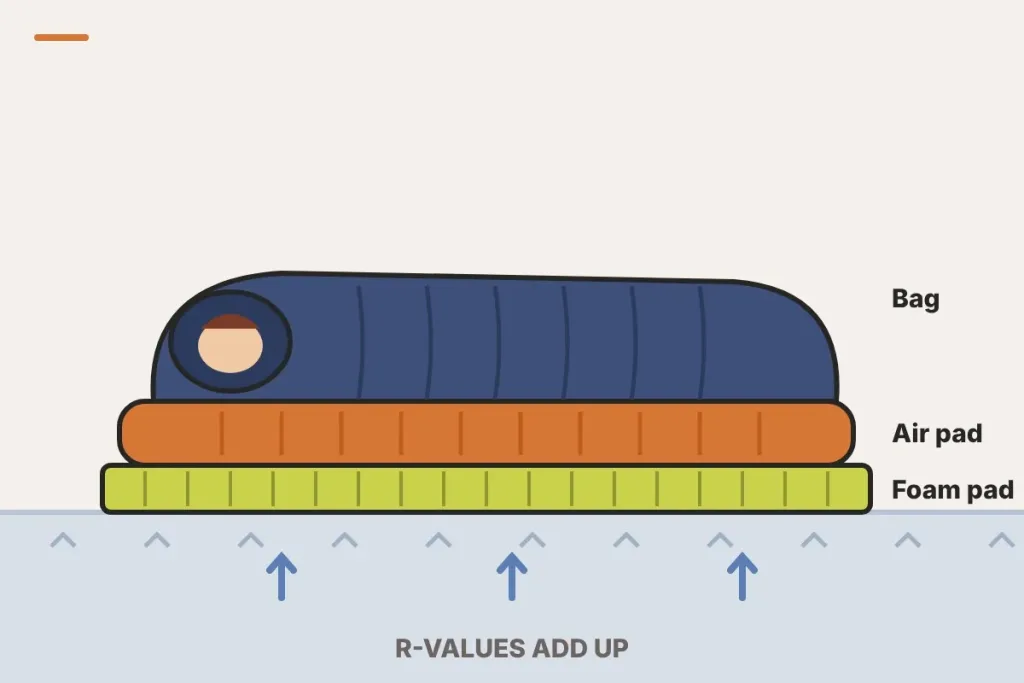
In winter you lose more heat into the ground than into the air, and a pad’s R-value measures how well it stops that. Since 2020, major brands including REI Co-op and Therm-a-Rest have rated pads with the same lab test (ASTM F3340), so their R-values can be compared (REI). Not every brand uses it yet. REI pairs expected lows with pad warmth like this (REI):
- Around 32°F: R-value 2 to 3.9
- Around 20°F: R-value 4 to 5.4
- Around 0°F and below: R-value 5.5 or higher
Know before you go: R-values add up. A closed-cell foam pad under an inflatable pad is a cheap way to add warmth, and it keeps you off the ground if the air pad springs a leak.
Amazon pick
Therm-a-Rest Z Lite Sol Foam Sleeping Pad

Why: A folding closed-cell foam pad with an R-value of 2.0 and a reflective coating. The regular size is 72 by 20 inches and weighs 14 oz (Amazon listing). Under an inflatable pad, it pushes a three-season setup into winter range.
Best for: Tent campers who already own an air pad, and anyone who wants a puncture-proof backup.
Watch out for: At R 2.0 it isn’t enough on its own for freezing nights, and the folded pad is bulky to strap to a pack.
Dress
Clothing: layers you can adjust
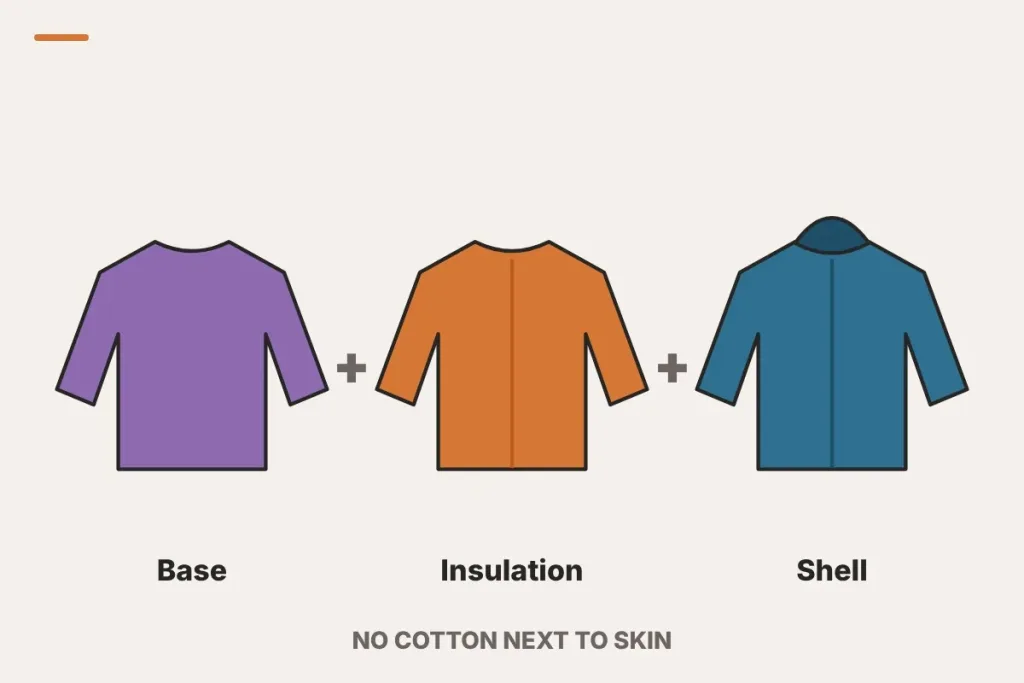
- Base layer: merino wool or synthetic, never cotton, which stays wet and cold.
- Insulation: a fleece or synthetic puffy for moving around, and a warm down or synthetic jacket for sitting in camp.
- Shell: a waterproof, windproof jacket and pants.
- Extremities: a warm hat, gloves plus mittens, wool socks with a dry pair saved for sleeping, and insulated boots.
Know before you go: change into dry base layers and sleep socks before bed. Damp clothes from the day pull heat out of you all night.
Shelter
Shelter: tents and RVs
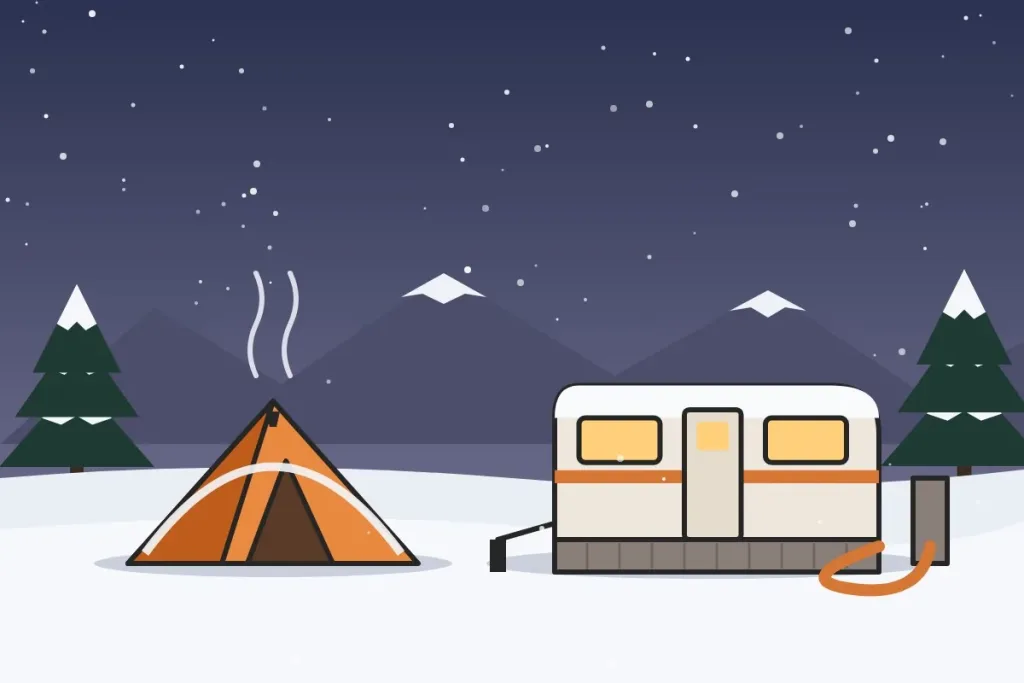
For tents, a sturdy three-season tent handles most cold, dry camping. Four-season tents are built for snow load and high wind. Either way, venting matters, because condensation from your breath can soak a sealed-up tent overnight.
RVers should focus on keeping water from freezing: a heated or insulated fresh water hose, holding tank heaters if the rig has the wiring, and skirting or insulation for the underbelly. Insulating window covers and vent cushions make a big difference to how hard the furnace works. If you’re storing the rig instead, follow our RV winterizing checklist.
Amazon pick
Camco 25-Foot Heated Drinking Water Hose
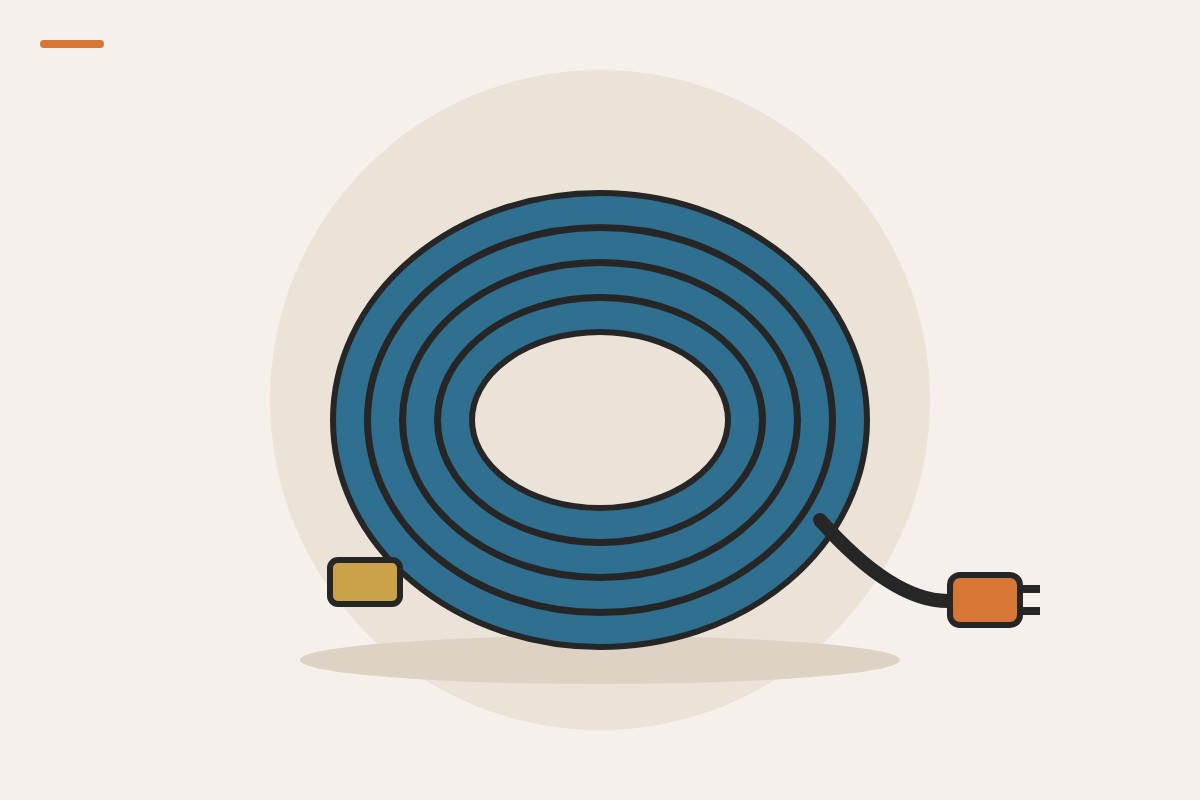
Why: A 25-foot, 5/8-inch drinking water hose with a thermostat-controlled heating cable that only heats when needed. Camco rates it for freeze protection down to -20°F, and the hose is certified to NSF/ANSI 61 for drinking water (Amazon listing).
Best for: RVers on full hookups who keep camping through freezing nights.
Watch out for: It runs on 120-volt power, so it does nothing at a dry site, and the spigot and fittings at each end still need their own insulation.
Safety
Fuel-burning heaters and carbon monoxide
The U.S. Consumer Product Safety Commission warns against using fuel-burning heaters or lanterns while sleeping in tents, campers and other vehicles because of carbon monoxide poisoning, and the risk rises at high altitude (CPSC). Turn any camping heater off before you go to sleep.
Heat safely
Heat: safe options only
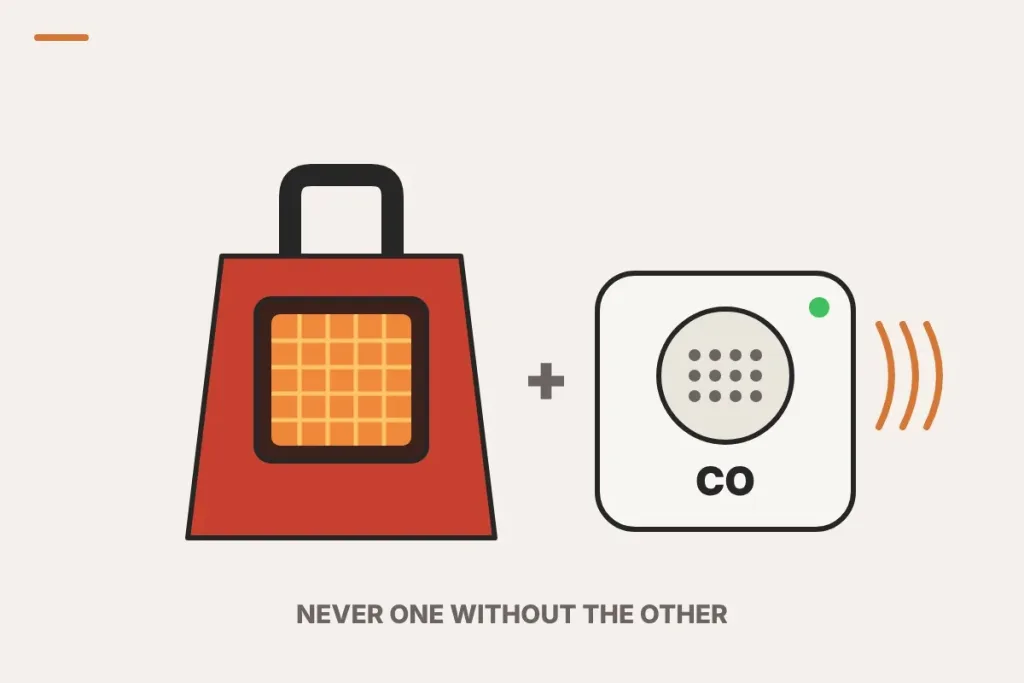
- Only use a heater indoors if it’s labeled for indoor use and has an oxygen depletion sensor and tip-over shutoff. Turn it off before you sleep.
- Every RV and every heated tent needs a working carbon monoxide alarm. Test the RV’s alarm before each trip.
- Never run a generator, grill or camp stove inside a tent, RV or vestibule.
- On electric hookups, a low-wattage electric heater or a heated mattress pad avoids combustion entirely.
Amazon pick
Mr. Heater Portable Buddy Heater
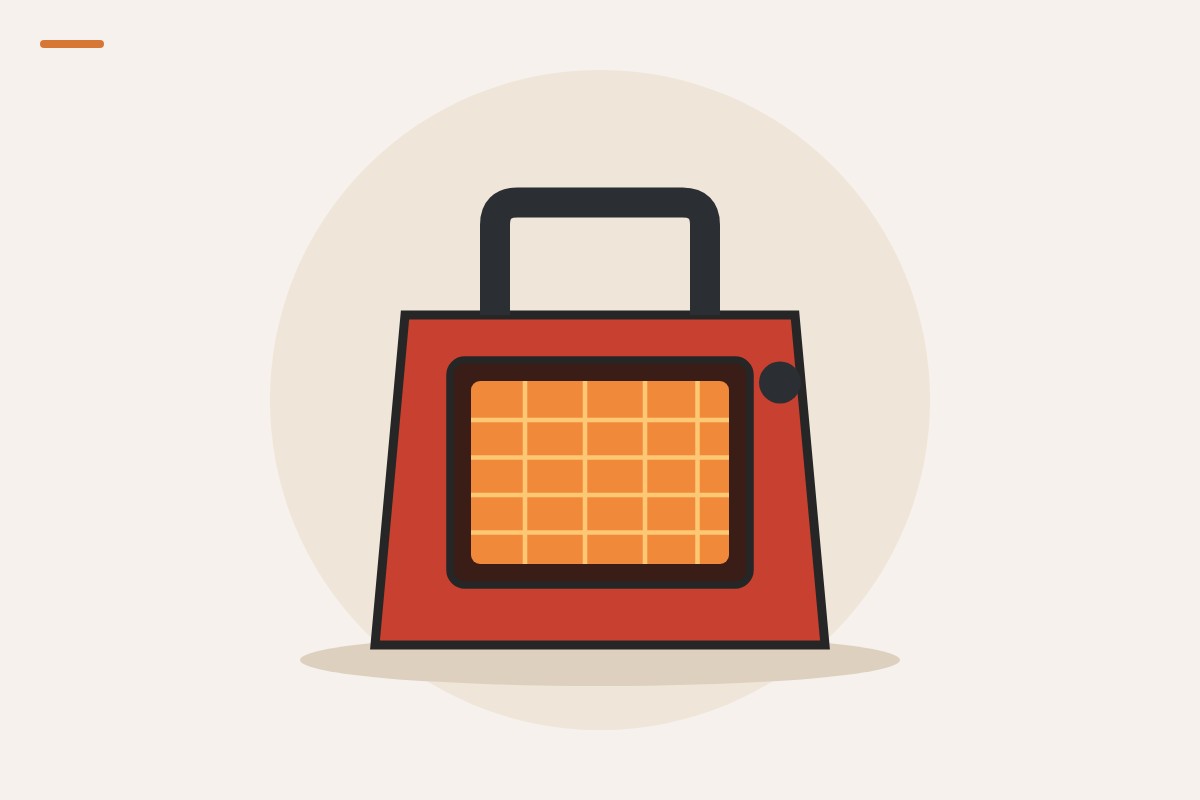
Why: A 4,000 or 9,000 BTU radiant propane heater, approved for indoor and outdoor use, with an emergency low-oxygen shutoff. It heats about 225 square feet and runs 5.4 hours on low from a 1 lb cylinder (Amazon listing).
Best for: Taking the chill off a camper, cabin or roomy tent before bed, and warming up in the morning.
Watch out for: Follow the maker’s ventilation instructions and turn it off before you go to sleep (CPSC). Always pair it with the CO alarm below.
Amazon pick
First Alert Battery-Powered Carbon Monoxide Alarm
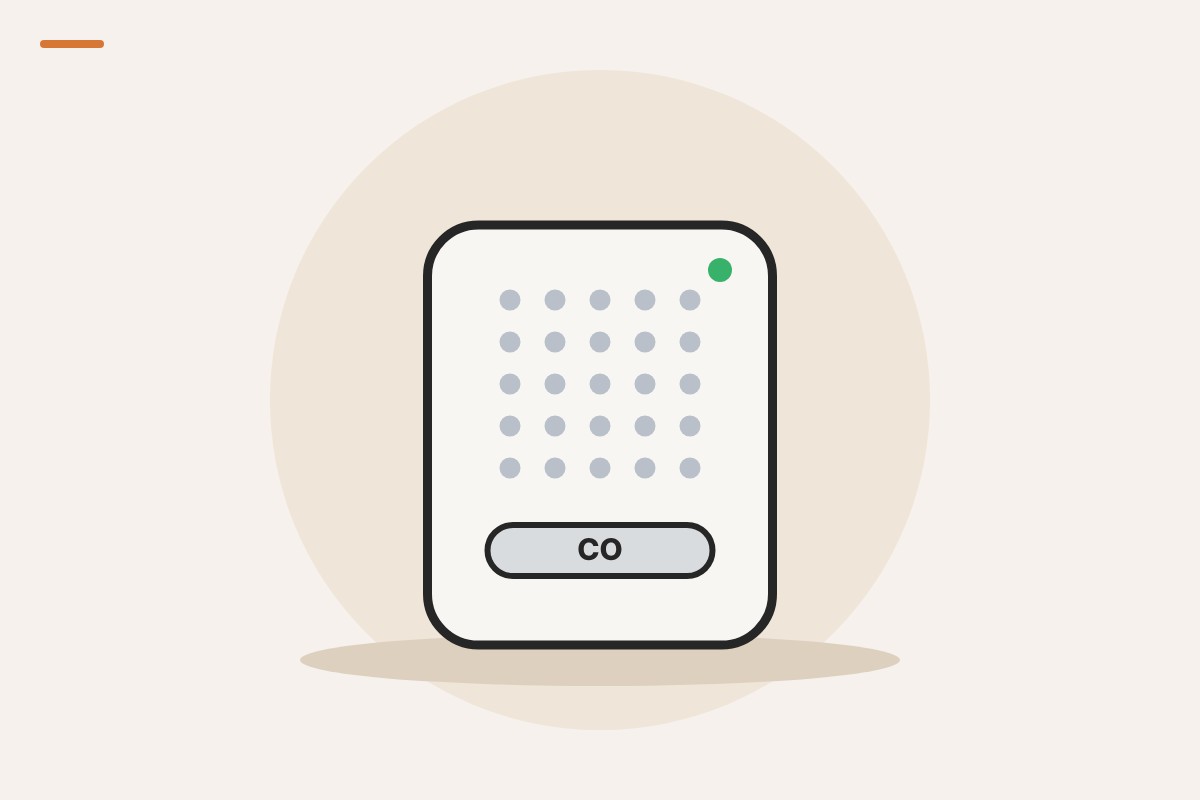
Why: An electrochemical CO sensor, an 85-decibel alarm and an end-of-life chirp, all on batteries, so it works in a tent or camper with no outlet (Amazon listing).
Best for: Everyone who brings a propane heater, stove or lantern on a cold trip.
Watch out for: It’s built for homes, so test it before you leave and pack spare batteries. An alarm isn’t a reason to run a heater overnight.
Around camp
Small items that make a big difference
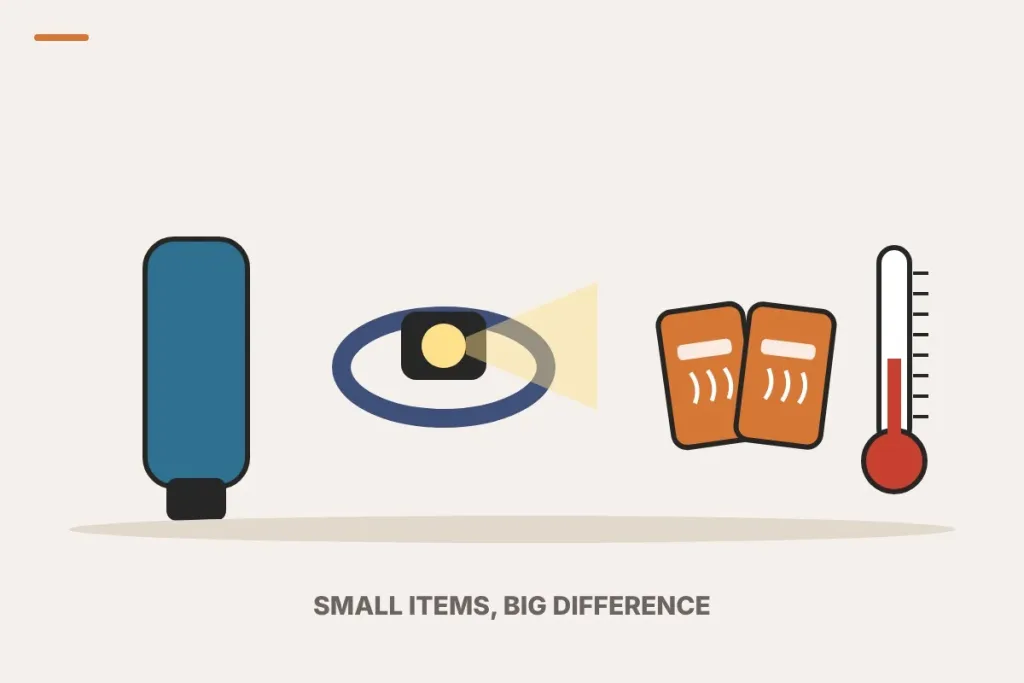
- Insulated bottles, so your water doesn’t freeze overnight. Store them upside down so ice forms at the bottom, not in the lid.
- A headlamp with lithium batteries, which hold up in the cold better than alkaline ones.
- Hand and toe warmers for your gloves, boots and the foot of your sleeping bag.
- A thermometer, so you learn how your gear actually performs at a known temperature.
Amazon pick
HotHands Hand Warmers, 40 Pairs
Why: Air-activated, single-use warmers that give up to 10 hours of heat, in a 40-pair box that lasts a whole season (Amazon listing).
Best for: Cold hands at camp, cold feet in the sleeping bag, and keeping phone batteries warm.
Watch out for: They’re single-use, and the maker says not to put them directly against your skin.
Cold-night tip
Test your setup close to home
Before a trip into real cold, spend one night in the backyard or at a campground near home with the exact bag, pads and clothes you plan to bring. Put the thermometer by your head. If you’re cold at 30 degrees, you’ll know what to fix before it matters.
Planning a cold-weather trip? Our Thanksgiving camping essentials cover cooking and power at sites with no fires or hookups →
Find camps along your route with QuickCamp
Paste a Google Maps directions link or type a route like San Francisco to Yosemite. QuickCamp maps the camps, hikes, Scout finds and safety conditions along the way, and saves your trips. No sign-in needed to search.
QuickCamp is made by the publisher of Camper News Now.
Sources
- REI: Sleeping Bag Temperature Ratings
- REI: Sleeping Pad Buying Guide
- REI: How Do You Know Which Sleeping Pad Will Keep You Warmer?
- CPSC: Portable Heaters and Camping Equipment
- CPSC: Portable Heaters Can Save Campers’ Lives
Find camps along your route with QuickCamp
Paste a Google Maps directions link or type a route like San Francisco to Yosemite. QuickCamp maps the camps, hikes, Scout finds and safety conditions along the way, and saves your trips. No sign-in needed to search.
QuickCamp is made by the publisher of Camper News Now.
Get the Camper News Now monthly
Closures, fee changes, recalls and new trip ideas for tent and RV campers. One free email a month.