
Dispersed camping means camping on public land outside a developed campground: no hookups, no picnic tables, no fee and usually no neighbors. It is legal on most National Forest land and on much of the land managed by the Bureau of Land Management (BLM), but it comes with rules, and those rules vary more than most campers expect.
This guide covers how it works on both kinds of land, the limits you are most likely to run into, and what to check before you pull off a forest road.
Where you can camp
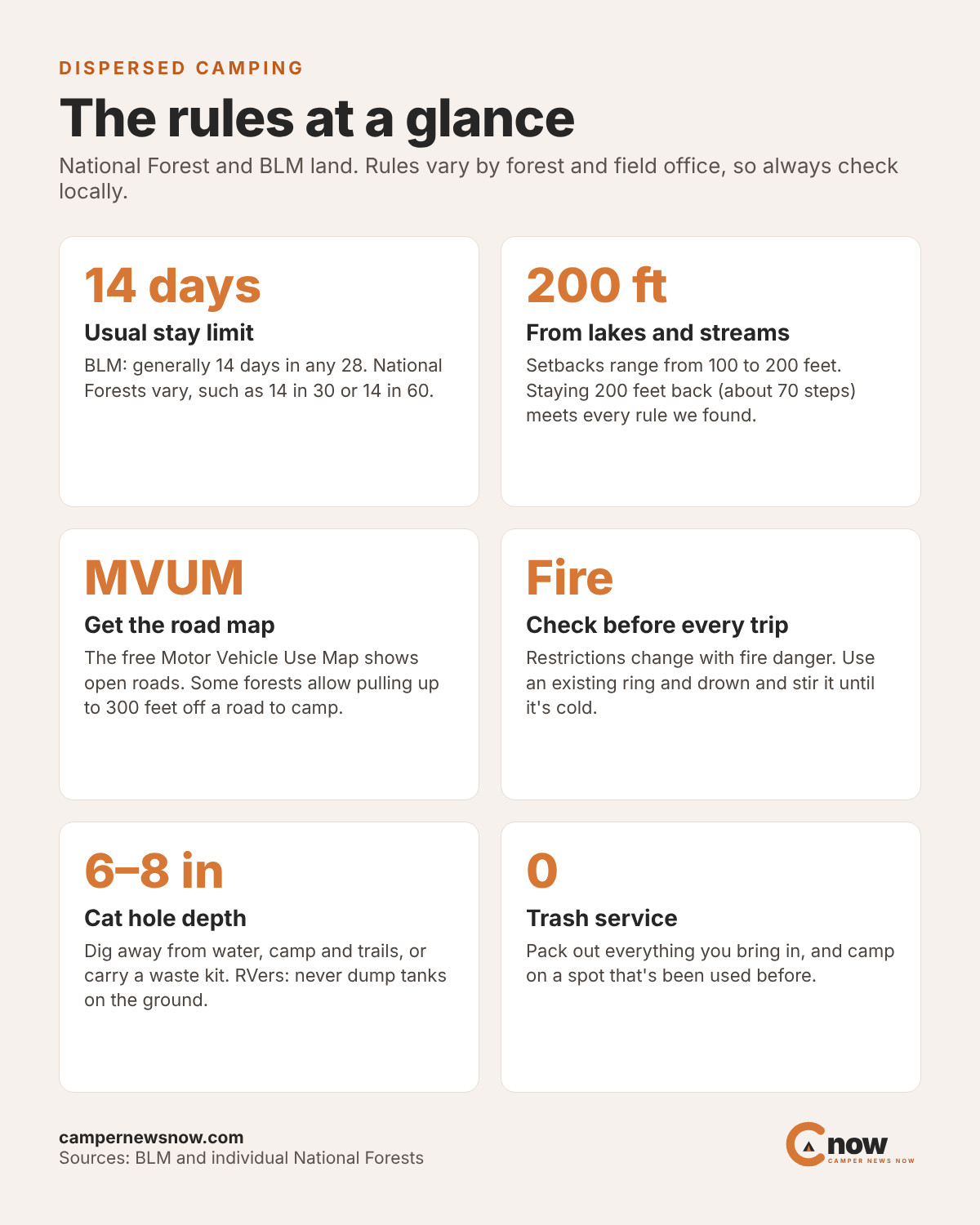
On National Forests, dispersed camping is generally allowed unless an area is signed or ordered closed. The key document is the forest’s free Motor Vehicle Use Map (MVUM), which shows which roads are open to vehicles and, on some forests, the corridors where you can pull off to camp. Many forests let you drive up to 300 feet off a designated road to reach a campsite, including the Black Hills and Nebraska National Forests, but not every forest allows it, so check the map.
On BLM land, dispersed camping is allowed on most public land unless it is posted closed. Some popular areas have switched to designated dispersed sites, where you can camp only at numbered spots. BLM Utah runs several of these, such as Beaver Dam Wash.
How long you can stay
Both agencies cap stays at about two weeks, but the details differ.
- BLM: the BLM’s national camping page says dispersed camping is generally limited to 14 days in any 28-day period, and stay limits vary by state and field office. In California, after day 14 you must move outside a 25-mile radius until the 29th day after you first set up.
- National Forests: 14 days is also the usual cap, but the window around it varies. Coronado National Forest allows 14 days in any 60-day period, while Rio Grande National Forest allows 14 days in any 30.
- Leaving gear: on BLM land, personal property generally cannot be left unattended for more than 10 days. Some states, including Idaho and Alaska, set different limits.
How far from water and roads
Most forests require you to camp a set distance from lakes and streams to protect water quality and wildlife access, but the distance is not the same everywhere. Coronado and Shasta-Trinity use 200 feet, Rio Grande uses 150 feet, and Black Hills and Apache-Sitgreaves use 100 feet. If you are not sure, 200 feet (about 70 adult steps) meets every rule we found.
Campfires
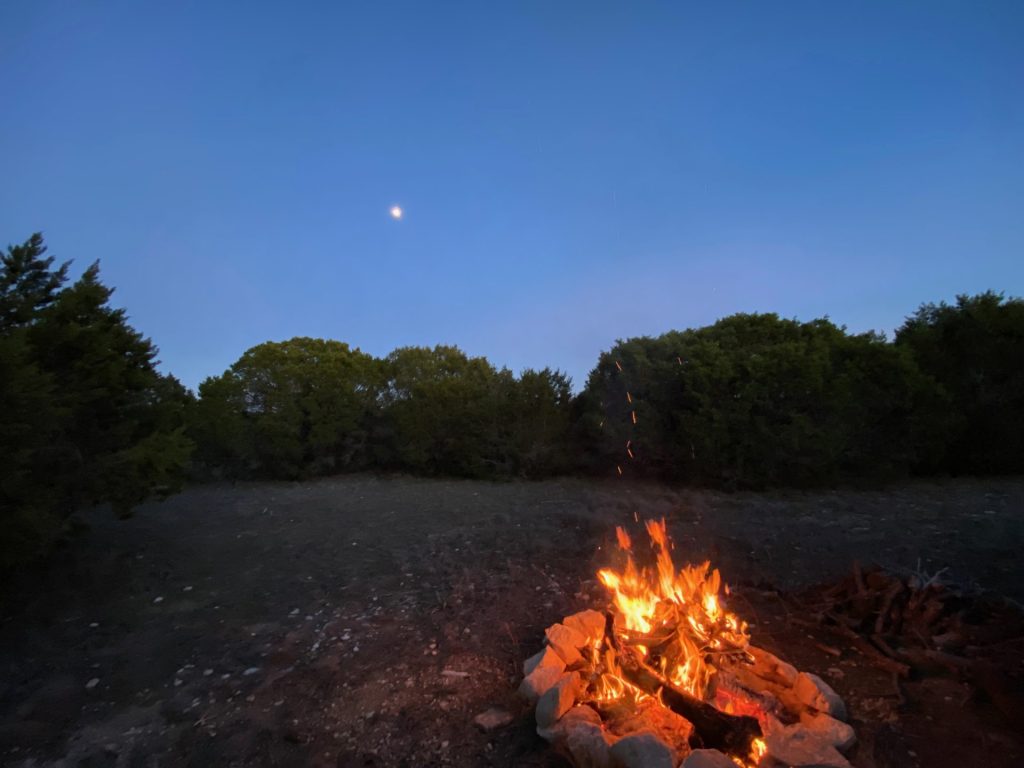
Fire rules change with the season and the fire danger, and restrictions are announced by individual forests and BLM field offices. Before every trip, check the forest or field office’s alerts page for fire restrictions. Where fires are allowed, use an existing fire ring, keep it small, and drown and stir it until it is cold before you go to bed or leave, as BLM Utah’s guidance puts it.
Trash and human waste
There is no trash pickup. Pack out everything you bring in. For human waste, dig a cat hole 6 to 8 inches deep, well away from water, camp and trails, or carry a waste bag or portable toilet. RVers should never dump gray or black tanks on the ground. Use a dump station.
Before you go: a quick checklist
- Find the right agency. Use the map to work out whether the land is National Forest, BLM, state land or private. Rules apply to the land you are actually on.
- Get the forest’s Motor Vehicle Use Map (free from the ranger district or as a PDF), or the local BLM field office’s rules.
- Check current alerts for fire restrictions, closures and road conditions.
- Confirm the stay limit and water setback for that forest or field office.
- Bring all the water you need, a way to pack out trash, and a shovel or waste kit.
- Pick a spot that has been used before rather than making a new one.
Dispersed camping is one of the best deals in the outdoors. Following the local rules keeps those areas open.